Cross World: Word Riddles
Quiz & Trivia Games by Mno Go AppsWord
4.8209.00 Reviews
- Version
- 2.12.012
- Installs
- 500.00K
- Age Rating
- Everyone
Screenshots
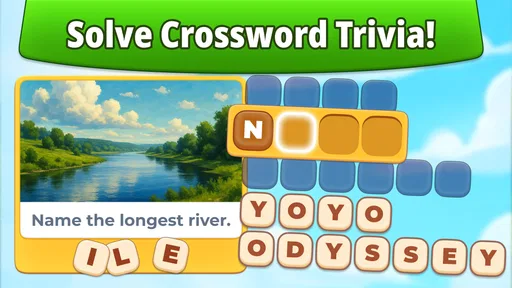
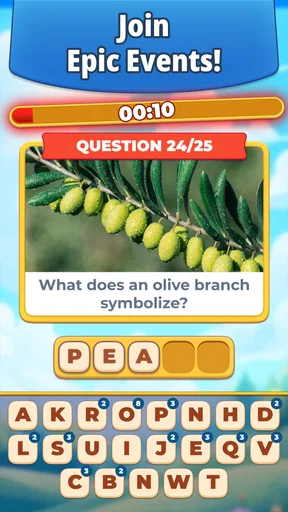
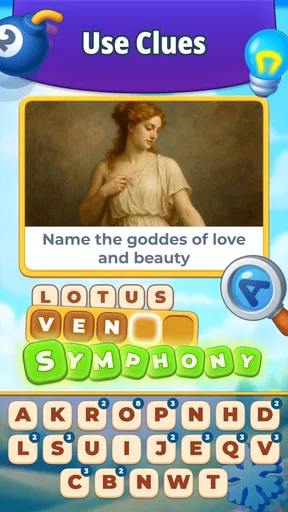
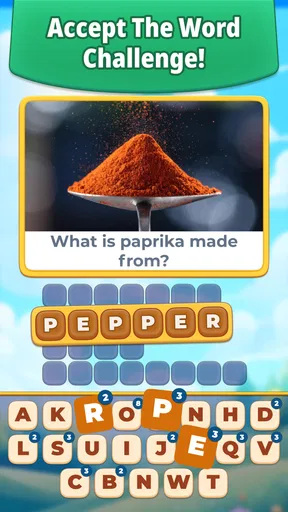
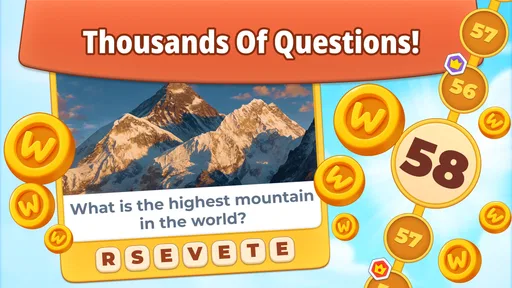
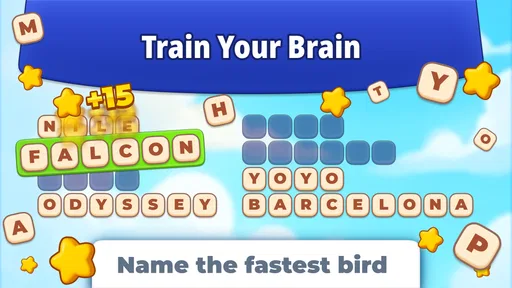
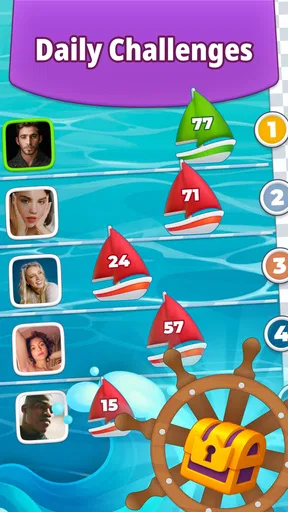
Our Review of Cross World: Word Riddles
 Analysis by Appyee
Cross World: Word Riddles immediately presents itself as a relaxed word game with a little more variety than a standard crossword app. Its basic appeal is easy to understand: I solve crossword-style clues, then switch into trivia thinking when the puzzle asks me to connect knowledge with vocabulary. That combination gives the game a pleasant middle ground between a quiet brain exercise and a general-knowledge quiz.
After spending time with it, I found the strongest part of the experience was not any single puzzle type, but the way the two ideas support each other. A clue can make me think about spelling, meaning, memory, and common facts in the same short session. The result feels approachable enough for a quick break, yet it still gives me something to chew on when a familiar answer refuses to come to mind.
Cross World: Word Riddles is a free word game from Quiz & Trivia Games by Mno Go Apps. It is rated for Everyone, so its general tone is suitable for a broad audience, including families and casual players who want something less intense than an action game. The current version is 2.12.012, and it runs on Android 6.0 or later.
A gentle first impression with a clear purpose
The opening impression is deliberately simple. This is not a game that needs a complicated story, a large cast of characters, or a long tutorial to explain its appeal. The focus stays on reading a clue, considering possible answers, and placing the right letters. That directness is useful because I can start playing without first learning a collection of menus or systems.
The visual direction supports that choice. The game’s identity comes from the language of puzzles rather than a dramatic fictional setting. Crossword grids, clue prompts, and quiz-style questions create the visual vocabulary, giving the interface a functional mood. I never felt that decoration was competing with the words I was trying to read. For this kind of game, restraint is valuable: the screen should help me concentrate rather than turn every answer into a visual event.
That simplicity also makes the game easy to recommend for short sessions. I can imagine opening it while waiting for an appointment, taking a few minutes during a lunch break, or playing in the evening when I want something engaging but not demanding. It does not ask me to commit to a long match or remember a complicated objective. The natural unit of play is a small mental challenge, which makes the game fit neatly into spare moments.
Its popularity suggests that this format has found a sizeable audience. The game has passed half a million installs and holds an average rating of 4.8 from roughly thirty-six thousand ratings. Those figures do not replace personal taste, but they do match my impression that the concept is easy to understand and broadly accessible.
The free entry point matters here. I can try the core experience without paying upfront, which makes it easier to decide whether the clue style suits me. There are optional in-app purchases, ranging from forty-nine cents to $94.99 per item. That wide range is worth keeping in mind: players who prefer a completely cost-free experience should approach optional purchases carefully and treat them as convenience spending rather than part of the basic reason to install the game.
Who will feel at home in the puzzle design?
I think the best audience is someone who enjoys crossword solving but does not want a strictly traditional crossword routine. The trivia element adds a useful change of mental gear. Instead of relying only on word patterns, I may need to recall a place, object, expression, or piece of general knowledge. That makes the game a good fit for players who like language but also enjoy being surprised by what they remember.
It is also suitable for people who want a calm alternative to competitive games. There is no need to build a team, chase opponents, or master fast controls. The challenge is internal: can I interpret the clue, identify the answer, and make the letters fit? That makes it comfortable for older players, casual learners, and anyone looking for a low-pressure way to keep the mind active.
On the other hand, I would not choose it for someone seeking a deep narrative, a strong sense of exploration, or constant novelty in presentation. The pleasure comes from solving, not from discovering a changing world. Players who need action, social competition, or a highly visual reward loop may find the experience too quiet.
How the game creates a world from words
Cross World does not need a conventional fantasy map to establish a setting. Its world is built from associations. Each clue points toward a small mental landscape, and the crossing letters gradually reveal how those ideas connect. I found that this creates a surprisingly coherent mood: the game feels like a collection of compact rooms made from language, with each completed answer opening the way to the next thought.
The setting is therefore more abstract than narrative. A question about a familiar fact can sit beside a clue that depends on vocabulary, and the transition feels natural because both are treated as pieces of the same word network. The game’s title makes sense in that context. The “world” is not somewhere I travel through as a character; it is the shifting space between definitions, letters, and remembered information.
This approach gives the art direction a practical job. A crossword game can easily become visually noisy if it tries too hard to make every puzzle look different. Here, the recognizable puzzle language keeps my attention on the relationship between clues and answers. The grid is not merely a container for letters; it becomes the main stage, while the surrounding presentation provides enough identity to make the session feel like a game rather than a worksheet.
One detail I appreciate is the way crossword logic creates a natural checking process. When I am uncertain about one answer, nearby letters can narrow the possibilities. That means I am not forced to solve every clue in isolation. I can work from the easiest prompt, use the confirmed letters to revisit a harder one, and gradually build confidence. This makes the game feel fairer than a trivia quiz where one forgotten fact can stop progress completely.
My most useful approach is to treat the grid as a conversation between clues. I begin with answers I know immediately, then look for short words or distinctive letter patterns. After that, I return to the questions that seemed vague. This workflow is more effective than staring at the hardest clue until something appears, and it turns uncertainty into part of the solving process rather than a dead end.
The mood created by visual restraint
The presentation works best when I want a focused, unhurried atmosphere. The game does not need dramatic scenery to make a completed puzzle satisfying. The visual reward comes from seeing an incomplete arrangement become readable. That is a modest pleasure, but it suits the subject. A word game should leave room for the player’s own imagination, and this design does that by letting the clues supply most of the mental imagery.
There is a trade-off, though. Players who judge a game mainly by visual spectacle may find the setting understated. The same consistency that helps me concentrate can also make longer sessions feel visually uniform. I would personally use it in shorter bursts rather than expecting it to provide the visual variety of a larger adventure game.
Sound, silence, and the rhythm of solving
For a word puzzle, sound should support concentration rather than dominate it. Cross World’s overall identity works because the solving rhythm remains at the center. I read, pause, test an idea, and then receive the satisfaction of making progress. That rhythm is fundamentally quieter than the loop of an arcade game, and the restrained approach suits the mental nature of the challenge.
The pacing is especially important when a puzzle contains a mixture of straightforward and more demanding clues. Easy answers create momentum, while difficult questions introduce pauses where I can think or use the letters already placed. If every clue were equally obvious, the experience would become mechanical. If every clue demanded obscure knowledge, it would feel tiring. The crossword-and-trivia blend gives the session a useful rise and fall.
I like that this pacing allows the game to serve different moods. In a short session, I can focus on quick answers and stop after a small amount of progress. When I have more time, I can stay with a stubborn grid and let the crossing letters do more of the work. The same basic mechanics therefore support both casual use and a more patient solving session.
A practical tip is to avoid treating a pause as failure. When I cannot answer a clue immediately, I move elsewhere in the grid rather than repeatedly rereading the same wording. Solving two or three connected entries often changes the entire puzzle. This is one of the game’s quiet strengths: progress can come from changing perspective, not just from knowing more facts.
The rhythm may be less satisfying for players who want immediate feedback after every action. Word puzzles naturally include stretches of uncertainty, and the game’s appeal depends on accepting those pauses. If I want constant motion or rapid rewards, a timed quiz or action title would be a better choice. If I enjoy the moment when several partial ideas suddenly align, this slower cadence is rewarding.
Why the trivia and crossword mechanics belong together
The central mechanical fit is convincing because crossword structure softens the difficulty of trivia. A quiz question can be challenging when presented alone, but the grid supplies additional information through word length and crossing letters. Conversely, a familiar answer can help unlock a section of the grid even when another clue is less obvious. The two systems give each other context.
This is more interesting than a simple sequence of unrelated quiz questions. In a conventional trivia app, I might answer correctly or incorrectly and immediately move on. Here, an answer has a second role: it becomes evidence for neighboring entries. That makes each solved clue feel more valuable, because it contributes to the structure of the whole puzzle.
The trade-off is that a mistaken interpretation can affect more than one space. If I confidently enter the wrong answer, the surrounding clues may become harder to read. When that happens, I find it better to revisit the original clue instead of forcing the neighboring answers to fit. The grid is useful as a guide, but it can also encourage confirmation bias if I become attached to an early guess.
This is where the game differs from the usual alternatives. A pure crossword app may offer a more specialized vocabulary experience, often rewarding players who already know the conventions of crossword clues. A standalone trivia game may provide broader subject coverage and a faster question-by-question pace. Cross World sits between them. It is less narrowly focused than a traditional crossword and more reflective than a rapid-fire quiz.
That middle position is its main advantage and its main limitation. Players who want expert-level crossword construction may find the trivia side less satisfying. Players who want a large competitive knowledge test may find the grid slows them down. I would choose this game when I want both kinds of thinking in one place, not when I am looking for the most demanding version of either genre.
How I would use it in everyday life
My preferred routine would be a ten-minute evening session with the goal of making steady progress rather than finishing everything immediately. I would solve the obvious clues first, use crossing letters to narrow the uncertain answers, and stop before the process becomes frustrating. Returning later with a fresh mind is part of the appeal; a clue that felt impossible during a busy day can become obvious after a break.
It can also work as a shared activity. Two people can look at a clue together, compare possible answers, and use the grid to settle disagreements. Because the game is rated for Everyone, it is suitable for a broad household audience, although different players may bring very different knowledge and vocabulary levels. That difference can make the trivia side conversational rather than purely competitive.
For learning, I would describe it as light practice rather than a structured educational tool. It encourages recall, spelling, and flexible thinking, but I would not use it as a replacement for a course or a dedicated study app. Its strength is that it makes mental exercise feel incidental and enjoyable, especially when I want to keep my brain active without following a formal lesson plan.
One useful habit is to notice why an answer was difficult. Sometimes the problem is not a lack of knowledge but an unusual wording, a synonym I did not consider, or a failure to use the crossing letters. Recognizing that difference helps me improve at the game. It also keeps the experience from becoming a simple test of memory, because interpretation and strategy matter just as much.
Where the experience may lose momentum
The biggest potential friction is repetition in the basic interaction. The player repeatedly reads clues, enters words, and completes grids. That is exactly what fans of the genre want, but it may feel narrow to anyone who needs constant changes in mechanics. The combined format adds variety in thought, not necessarily a completely different style of play.
The trivia angle can also create uneven difficulty. A clue based on common knowledge may be instantly accessible to one player and surprisingly difficult for another. Crossword letters help, but they do not remove that difference. I would recommend it more confidently to people who enjoy learning through guesses than to players who become annoyed when a question depends on a fact outside their interests.
The free model is another consideration. Since the game costs nothing to start, it is easy to test, but optional purchases can change how different players experience convenience. The listed purchase range begins at forty-nine cents and reaches $94.99 per item. I would keep purchases disabled or set a personal limit if I were sharing the device with a child or simply wanted the game to remain a no-cost pastime.
There is also a question of screen time. Because each puzzle is easy to understand and progress is naturally divided into small steps, it can be tempting to continue longer than planned. I find the best balance comes from deciding in advance whether I am playing one puzzle or taking a short break. That keeps the relaxed mood intact instead of turning the game into another endless feed.
Players using older devices should note the Android requirement: the game needs Android 6.0 or later. That is a modest threshold, but it still matters if the app is being considered for an older handset. On compatible hardware, the straightforward presentation should be comfortable for casual play, though anyone with a very small screen may prefer a device that makes the grid and clue text easy to read.
My atmosphere verdict after playing
Cross World: Word Riddles succeeds because its mood and mechanics point in the same direction. The art direction keeps the puzzle visible, the setting turns language into a kind of abstract world, and the sound-and-pacing approach leaves room for thought. Nothing needs to shout for attention. The satisfaction comes from making connections and watching a collection of uncertain clues become a complete pattern.
I would recommend it to a friend who likes crosswords but wants occasional trivia prompts to break up the routine. It is also a good choice for someone looking for an approachable brain game that works in short sessions and does not demand fast reflexes. The free download makes trying it straightforward, while the Everyone rating broadens its usefulness for family play.
I would skip it if my priority were a story-driven adventure, competitive multiplayer, or a highly animated presentation. I would also choose a specialist crossword or trivia app if I wanted the deepest possible version of only one of those formats. Cross World is better understood as a balanced hybrid: it gives each side enough space to make the other more enjoyable.
Quiz & Trivia Games by Mno Go Apps has built a game with a clear identity rather than simply placing random questions beside a word grid. Its strongest quality is the way clues, letters, and general knowledge create a steady solving rhythm. The experience is not flashy, and it can become repetitive for players who need constant novelty, but that restraint is precisely why it works for quiet, thoughtful play.
With a 4.8 average and around thirty-six thousand ratings, the game has clearly connected with many players. My own recommendation is measured but positive: install it if you want a calm word puzzle with a trivia twist, begin without spending anything, and give the grid time to guide you when memory alone is not enough. For the right player, its understated atmosphere makes every solved answer feel more personal and satisfying.
Verdict
Strengths of Cross World: Word Riddles
- Simple interface makes it easy to start playing without a tutorial.
- Short riddles are convenient for quick sessions during spare moments.
- Gradual difficulty gives beginners time to learn the game’s logic.
- Word-based gameplay can help improve vocabulary and lateral thinking.
- Suitable for players who prefer calm, non-action puzzle experiences.
Limitations of Cross World: Word Riddles
- Some riddles may feel subjective and accept fewer answers than expected.
- Progress can become repetitive if you play for long sessions.
- Hints may reduce the challenge for players seeking a pure puzzle experience.
- Players wanting competitive or multiplayer features may find it limited.
- Later puzzles can require trial and error rather than clear reasoning.
Other Releases by Quiz & Trivia Games by Mno Go Apps
View All
QuizzLand. Quiz & Trivia game
Trivia4.8

IQ & brain test: Triviascapes
Trivia4.8

Quiz Blitz: Test Brain Game
Trivia4.8

Wood Quiz Blast: Trivia Blocks
Trivia4.8
Similar Picks in This Category
View All
Word Search - Word Puzzle Game
Bluetile4.8

Word Search Quest - Puzzles
Blackout Lab4.8

CodyCross: Crossword Puzzles
Fanatee, Inc.4.7

Words of Wonders: Crossword
Fugo Games4.9

Wordscapes: Word puzzle game
PeopleFun4.7

Word Search Explorer
PlaySimple Games4.9
Frequently Asked Questions
What is Cross World: Word Riddles?
Cross World: Word Riddles is a word puzzle game that combines crossword-style grids with clue-solving challenges. Players connect letters, discover hidden words, and complete themed levels by using their vocabulary and reasoning skills. The game is designed for short relaxing sessions, although later puzzles can become considerably more difficult and may require careful thinking or the use of hints.
How do you play Cross World: Word Riddles?
Gameplay generally involves reading the clues provided on each puzzle and forming the correct answers from the available letters. Tap or swipe across letters to create words, then place them into the crossword grid. Some answers are directly related to the clues, while others may be bonus words that reward additional coins or progress. Paying attention to word length and crossing letters is important.
Is Cross World: Word Riddles free to download and play?
Cross World: Word Riddles can typically be downloaded for free, allowing players to access the core puzzle experience without paying upfront. However, free-to-play games commonly include optional advertisements and in-app purchases, such as hint packs, coins, or ad-removal options. Before downloading, check the current store listing for the exact purchase conditions and whether the game offers an offline or ad-free experience.
Does Cross World: Word Riddles require an internet connection?
The basic word puzzles may be playable without a continuous internet connection, which makes the game convenient for travel or situations with limited connectivity. Nevertheless, an internet connection may be needed for advertisements, cloud synchronization, updates, purchases, or special events. Availability of offline play can vary by device version, so it is worth testing the game after installation before relying on it without mobile data.
Is Cross World: Word Riddles suitable for children and beginners?
The game is generally approachable for beginners because its controls are simple and early levels introduce the word-solving mechanics gradually. It can also be useful for players who enjoy vocabulary practice and casual brain training. However, difficulty, advertising, and in-app purchase settings should be reviewed by parents before children play. Younger users may need help with unfamiliar words or more advanced riddles.
Play our best games!


